Key takeaways
- Money is what people use to pay, to measure value and to store it. It works because everyone trusts that others will accept it.
- Icelanders have used homespun cloth, fish, Danish coins and their own króna. From 1974 to 1983, inflation in Iceland was above 30% every year.
- Bitcoin is digital, has a fixed supply and no central bank. That is why many people see it as a store of value.
- The króna does jobs Bitcoin doesn't. Wages, prices and taxes are in krónur, and the Central Bank uses interest rates to keep prices stable.
Contents
Money is whatever people generally use to pay for goods and services, to measure value and to store it for later. It works because everyone trusts that others will accept it. The króna, the dollar and Bitcoin are different ways of doing these same jobs.
From barter to banknotes
Before money, people swapped goods directly. That only works if each side wants what the other is offering, at the same moment. A plumber who needs their car fixed would have to find a mechanic who happens to need a plumber.
So people began using goods that everyone wanted and that were easy to value. Livestock played this role in many places, and later metals such as gold, silver and copper.
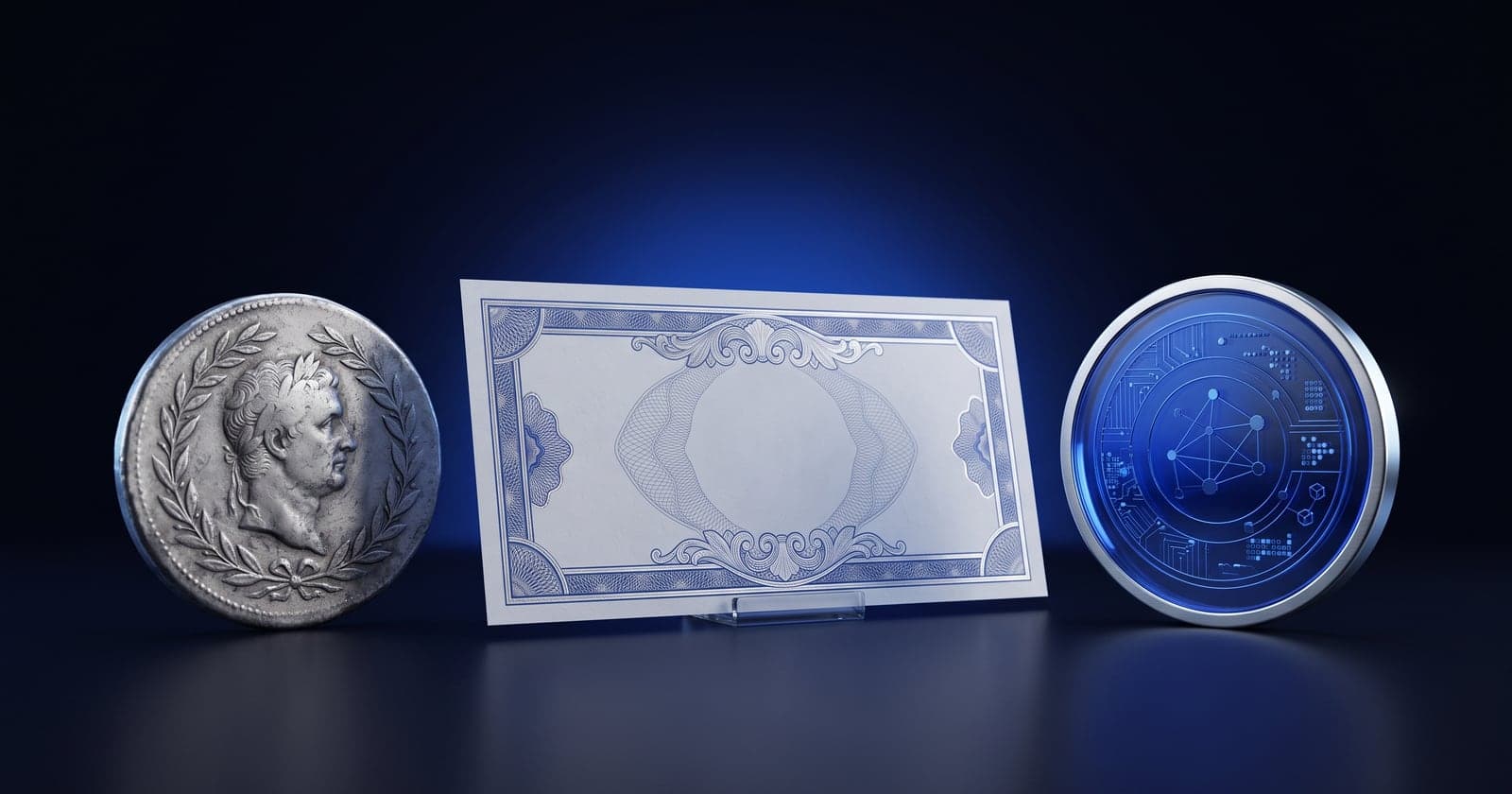
Coins came next. Rulers struck coins from precious metal and vouched for their weight and purity, so silver no longer had to be weighed for every trade. The oldest known coins are more than 2,600 years old and come from ancient Greece and its neighbours.
Banknotes started out as receipts. Merchants and goldsmiths stored gold and silver for people and issued a receipt in return. Soon people paid with the receipts themselves, and these became banknotes.
Fiat money and digital money
For a long time you could exchange banknotes for gold or silver with the issuer. Those days are gone. The króna, the euro and the dollar are fiat currenciesFiat currencyGovernment-issued money whose value rests on law and trust rather than gold, like the Icelandic króna.. They aren't backed by precious metal; they rest on law and on trust in the state and the central bank that issues them.
Today most money doesn't even exist on paper. Your wages arrive as a number in a bank account. When you pay by card, phone or payment app, that number moves between accounts, and many people hardly handle banknotes any more.
Unlike crypto, bank money relies on the bank keeping the books, with the Central Bank behind the whole system.
The three functions of money
Economists describe money in terms of three functions:
- Means of payment. You use money to pay for goods and services, whether a cup of coffee or the rent. The seller accepts it because they know others will too.
- Unit of account. Prices, wages and debts are measured in money. When a litre of milk and a car are both priced in krónur, they are easy to compare.
- Store of valueStore of valueAn asset that keeps its purchasing power over a long time, so it can be saved now and used later, as gold has done for centuries.. You can put money aside and use it later. That only works well if it keeps its value.
Good money does all three. When inflation is high, the store of value fails first, and people look for other ways to keep their savings.
What gives money value?
A banknote is paper and a bank balance is a number in a computer. The value comes from elsewhere:
- Trust and reach. Money is valuable because people accept it. The more people use it, the more useful it becomes.
- Law. Under Act No. 22/1968 on the currency of Iceland, the Central Bank's notes and coins are legal tender for all payments in Iceland. Taxes are paid in krónur too, so everyone needs them.
- Limited supply. If anyone could create money, it would be worthless. Only the Central Bank may issue notes and coins, although banks also create new deposits when they lend.
- Stable prices. The Central Bank uses interest rates to keep the value as stable as possible. If the money supply grows faster than output, prices rise, and that is InflationInflationA general rise in prices over time, which means each króna buys less than before..
Iceland's money history
Homespun cloth and fish
In the Middle Ages, Icelanders used vaðmál, a homespun woollen cloth, as money, and an ell (alin) of cloth became a unit of value. One hundrað equalled 120 ells, and land was valued in hundreds. Later in the Middle Ages, fish also became a unit of value. A proper fish was dried and weighed close to one kilogram, and under the Búalög price lists, two fish equalled one ell.
Over time, the ell and the fish became mainly units of account. A farm, livestock or a debt could be valued in ells without any cloth changing hands. The unit of account and the means of payment don't have to be the same thing.
Danish coins and the Icelandic króna
In the 18th and 19th centuries, Danish currency circulated in Iceland, with rigsdaler, specie and skilling coins, but people long preferred barter and weighed precious metal. In 1873, Denmark, Norway and Sweden founded the Scandinavian Monetary Union. The króna and the eyrir then replaced the older units, in Iceland too. The national treasury issued the first Icelandic banknotes in 1886.
The Icelandic króna still stayed on par with the Danish krone. The 1918 Act of Union gave Iceland the right to mint its own coins, and the first Icelandic coins were struck in 1922. That same year the two parted ways: in June 1922 the króna was devalued by 23% against the Danish krone and allowed to float.
The inflation years and the 1981 currency reform
In the 1970s inflation got out of hand. According to Statistics Iceland, it was above 30% every year from 1974 to 1983, and in 1983 it reached 84%. Prices increased more than seventeenfold between 1970 and 1980. Between 1974 and 1989, the króna was devalued 25 times.
On 1 January 1981, two zeros were removed from the króna. One new króna was worth 100 old ones, and new notes and coins went into circulation. The reform did nothing to stop inflation itself, which peaked two years later.
The crash and capital controls
In the banking collapse of autumn 2008, the króna fell sharply and inflation reached 18.6% in January 2009. On 28 November 2008, capital controls were imposed, restricting foreign exchange trading and moving money abroad. They were largely lifted on 14 March 2017, more than eight years later.
The inflation target
Since 27 March 2001, the Central Bank's target has been inflation as close as possible to 2.5% a year on average. If it deviates by more than 1.5 percentage points, the Bank must publicly explain the reasons to the government.
Inflation has often been above target, though. From March 2001 to September 2026, the consumer price index rose by 242%, or about 4.9% a year on average. What cost ISK 10,000 in January 2020 cost about ISK 14,800 in September 2026, when 12-month inflation was 5.9%.
Where does Bitcoin fit in?
BitcoinBitcoinThe first and largest cryptocurrency: a digital currency that no single party controls, with a fixed limit of 21 million coins. is the newest chapter in the long history of money. It was introduced in 2008, and the network has been running since January 2009. Bitcoin combines three things that had never come together before:
- Digital. It can be sent over the internet anywhere in the world, without a bank or payment network.
- Fixed supply. Bitcoin's maximum supplyMaximum supplyThe largest number of units of a cryptocurrency that can ever exist under its rules, such as 21 million for bitcoin. is 21 million. The rule is built into the software, and nobody can change it alone.
- No central bank. No single party issues bitcoin or runs the network. Transactions are recorded on a BlockchainBlockchainA public ledger where transactions are grouped into blocks, each linked to the one before, so past records can't be altered without it showing. kept by thousands of computers around the world, and this DecentralisationDecentralisationWhen power and responsibility are spread across many participants, instead of one bank, company or government controlling a system. is at the heart of the design.
A fixed supply appeals to many people, not least in Iceland. Anyone who remembers the inflation years knows what it is like to watch savings melt away. Money that nobody can print more of offers something different, which is why many people see bitcoin above all as a store of value, a kind of digital gold. The arguments are set out in Why does Bitcoin have value?
As a unit of account, though, bitcoin is little used. Few people price goods or wages in bitcoin, partly because its price in krónur swingsVolatilityHow much and how quickly the price of an asset moves up and down. a lot.
What the króna does that Bitcoin doesn't
The króna does jobs that Bitcoin doesn't:
- Wages and prices. Your wages, your rent and the prices in the shop are in krónur. Most household debt is in krónur too.
- Legal tender and taxes. The króna is legal tender in Iceland and taxes are paid in krónur. Bitcoin is not legal tender here.
- The Central Bank can respond. The Central Bank raises and lowers interest rates to hold back inflation or support the economy, and it can lend to banks in a crisis. Bitcoin's supply responds to nothing. That is both a strength and a weakness: nobody can debase bitcoin by printing more, but nobody can expand the supply when a crisis hits either.
- Day-to-day stability. A króna today is worth almost the same tomorrow. The price of bitcoin in krónur, by contrast, can move by tens of percent in a few weeks.
Closing thoughts
Money has taken many forms in Iceland: homespun cloth, fish, Danish coins, banknotes and numbers in a bank account. What matters most is that people trust others to accept it and trust it to hold its value.
The króna's history shows how costly it is when money fails as a store of value, and that explains why many Icelanders are interested in bitcoin. The króna still does the everyday jobs of money in Iceland, though. If you are thinking about owning bitcoin, read up on the risks first.